What Are Backlinks? A Beginner’s Guide to Links and SEO
If content is the foundation of SEO, backlinks are one of its strongest supports. They are a big part of how Google decides which pages deserve to rank. Here is a clear introduction for beginners.
What Is a Backlink?
A backlink (also called an inbound or external link) is a link from another website to yours. If a cooking blog links to your article about knife sharpening, that is a backlink for your site.
Why Backlinks Matter
Since Google’s early days, links have been treated like votes of confidence. When many trustworthy, relevant sites link to a page, it suggests the page is useful. Google has confirmed that links remain one of many ranking signals, though they are weighed alongside content quality and relevance.
Backlinks also help Google discover new pages and can send you referral traffic directly.
Not All Links Are Equal
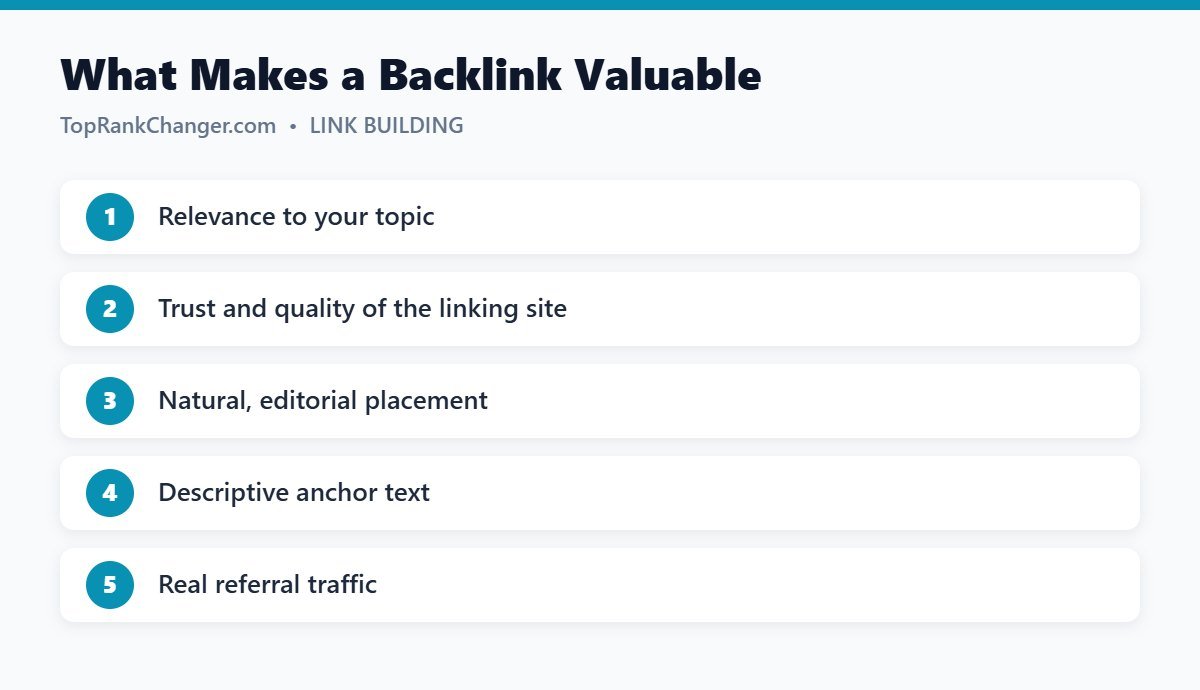
One link from a respected site in your niche can be worth more than hundreds of links from low-quality directories. Key factors:
- Relevance: a link from a gardening site to a gardening article makes sense.
- Authority and trust: links from well-established, reputable sites carry more weight.
- Placement: links within the main content are usually more valuable than footer or sidebar links.
- Anchor text: the clickable words give context about the linked page.
- Link attributes: links marked
nofollow,sponsoredorugctell Google not to treat them as endorsements, although Google may still use them as hints.
Good Links vs. Bad Links
Good links are earned because your content is useful. Bad links are manufactured: bought links, link farms, private blog networks, automated comment spam and excessive link swaps. Google’s spam policies target these, and they can lead to links being ignored or, in serious cases, a manual action.
How Beginners Can Earn Backlinks
- Publish genuinely useful content — guides, original data, tools and templates that others want to reference.
- Get listed where it makes sense — relevant business profiles, communities and resource pages.
- Guest post on respected sites in your niche with real readers.
- Answer journalist requests as an expert source.
- Build relationships with other bloggers in your field.
We explain each method in detail in white-hat link building strategies.
How to Check Your Backlinks
Google Search Console’s Links report shows sites linking to you and your most-linked pages. Free versions of tools like Ahrefs Webmaster Tools also show backlink data for sites you own.
Final Thoughts
Backlinks matter, but they are a result, not a shortcut. Focus on content people want to share and cite, promote it to the right people, and links will build up naturally over time.