White-Hat Link Building: 8 Safe Strategies That Work for New Blogs
Backlinks are still one of the strongest signals Google uses to judge a website’s authority. But not all links are good links — and the wrong kind can get your site penalized. This guide covers ethical, “white-hat” link building strategies that work for new blogs and small websites.
What Is Link Building?
Link building is the process of getting other websites to link to yours. Each relevant link from a trustworthy site acts like a recommendation, helping search engines see your content as credible and worth ranking. Links also send referral visitors directly to your site.
What Makes a Good Backlink?
- Relevance – the linking site covers a topic related to yours.
- Trust and quality – the site is a real publication or business with real readers, not a link farm.
- Editorial placement – the link sits naturally within content because it is useful to readers.
- Traffic – links that actually get clicked are usually the most valuable.
What to Avoid
Google’s spam policies prohibit link schemes, including buying or selling links that pass ranking credit, excessive link exchanges (“link to me and I’ll link to you”), large-scale guest posting with keyword-rich links, automated link-building programs and private blog networks (PBNs). These tactics can lead to your links being ignored or to a manual action against your site. When a link is paid or sponsored, it should be marked with rel="sponsored" or rel="nofollow".
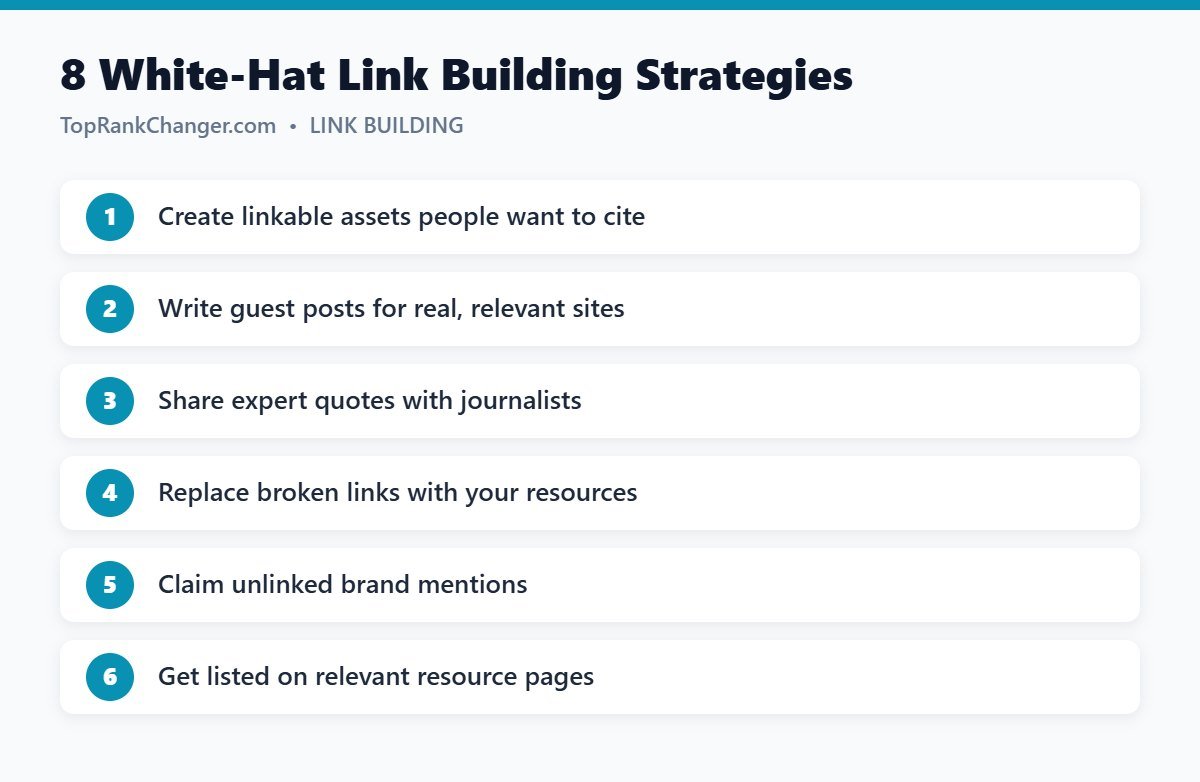
1. Create Linkable Assets
The easiest links to earn are links to content people naturally want to reference. Examples:
- Original research, surveys or data studies
- Free tools, calculators and templates
- Ultimate guides that become the go-to resource on a topic
- Helpful infographics, charts and diagrams
- Statistics roundups that you keep updated
2. Guest Posting (Done the Right Way)
Writing articles for respected sites in your niche puts your expertise in front of a new audience. Focus on sites with real readers, write genuinely valuable content, and treat any link back to your site as a bonus, typically in your author bio. Avoid sites that openly sell “guest posts” to anyone who pays.
3. Digital PR and Expert Quotes
Journalists and bloggers constantly look for expert sources. Platforms that connect journalists with sources, along with responding to requests on social media, can earn you mentions and links from news sites and major blogs. Answer quickly, be specific and share genuine expertise.
4. Broken Link Building
- Find relevant pages in your niche that link to a page that no longer exists.
- Create (or point to) a helpful resource on your site that covers the same topic.
- Politely email the site owner, point out the broken link and suggest your resource as a replacement.
You are helping them fix their site, so response rates are often better than cold outreach.
5. Unlinked Brand Mentions
Search for your brand name or your articles being mentioned without a link. Send a friendly note thanking the author and asking if they would add a link so readers can find the source.
6. Resource Pages
Many sites maintain pages listing helpful resources on a topic (“best resources for learning SEO”). If your content genuinely fits, reach out and suggest it.
7. Build Relationships in Your Niche
Comment thoughtfully on other blogs, share their work, join communities and help others. Links often come naturally from people who already know and trust you. This is slow, but it compounds.
8. Help A Community
Answering questions in forums and groups rarely produces valuable links directly, but it builds visibility, brings referral visitors and teaches you what your audience struggles with — perfect ideas for your next linkable asset.
Writing Outreach Emails That Get Replies
- Personalize every email. Mention something specific about their site.
- Keep it short: who you are, why you are writing, and how it helps them.
- Make it easy — include the exact page and link.
- Follow up once, then move on.
How Many Links Do You Need?
There is no fixed number. It depends on how competitive your topics are. A few highly relevant links from trusted sites are worth more than hundreds of low-quality ones. Track progress in Google Search Console’s Links report.
Final Thoughts
The best link building strategy is to create content worth linking to and then make sure the right people see it. It takes longer than buying links, but it is safe, sustainable and builds a website that grows stronger every year. Start by making each page truly useful — follow our on-page SEO checklist.