How to Update Old Blog Posts for More Traffic (Step-by-Step)
Writing new content isn’t the only way to grow traffic. Often, the fastest gains come when you update old blog posts that are already close to ranking well. Here is a simple, repeatable refresh process.
Why Update Old Blog Posts?
- Information goes out of date, and readers and Google notice.
- Competitors publish better content over time.
- Pages already indexed with some rankings can improve faster than brand-new posts.
- You know much more now than when you first wrote them.
Step 1: Choose Which Posts to Update
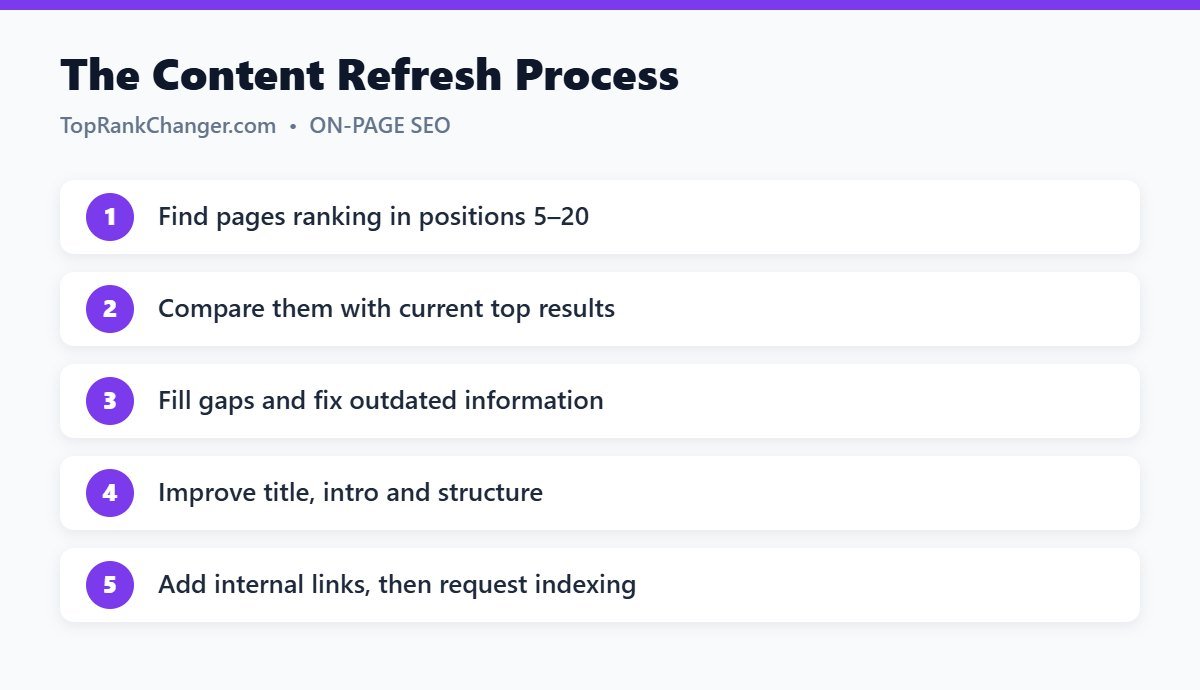
In Google Search Console, open the Performance report and look for:
- Pages with many impressions and average positions between 5 and 20
- Pages whose clicks have declined compared with last year
- Pages with high impressions but low click-through rate
Step 2: Study the Current Top Results
Search the page’s main query. What do the top results cover that you don’t? Has the search intent changed? Are they newer, more visual or better organized?
Step 3: Improve the Content
- Fix outdated facts, screenshots, prices and links.
- Add missing subtopics and answer related questions from People Also Ask.
- Add first-hand experience, examples and original images.
- Remove fluff and sections that no longer help.
- Check the queries the page already ranks for in Search Console and make sure they are clearly answered.
Step 4: Improve the Presentation
- Rewrite the title tag and meta description if CTR is low.
- Tighten the introduction so the answer appears quickly.
- Improve headings, add lists and tables where helpful.
Step 5: Strengthen Internal Links
Link to the refreshed post from newer related articles and link out from it to relevant pages.
Step 6: Republish Thoughtfully
If the changes are substantial, update the “last updated” date. Don’t change dates without making real improvements — that misleads readers. Keep the same URL so the page keeps its existing signals. Then request indexing in Search Console.
Step 7: Measure
Compare clicks and positions four to eight weeks later. Note what worked and apply it to other posts.
Final Thoughts
Make content refreshes a regular part of your schedule — for example, one update for every two or three new posts. It is one of the highest-return SEO habits you can build.