SEO-Friendly URLs: How to Create Clean, Readable Links
A URL is one of the first things both users and search engines see. SEO-friendly URLs are short, readable and describe the page clearly. They are easy to create and make your site look more trustworthy.
What Makes URLs SEO-Friendly?
Compare these two addresses:
example.com/?p=4827example.com/clean-cast-iron-pan/
The second tells readers and Google exactly what to expect before they click. That is the goal.
Best Practices
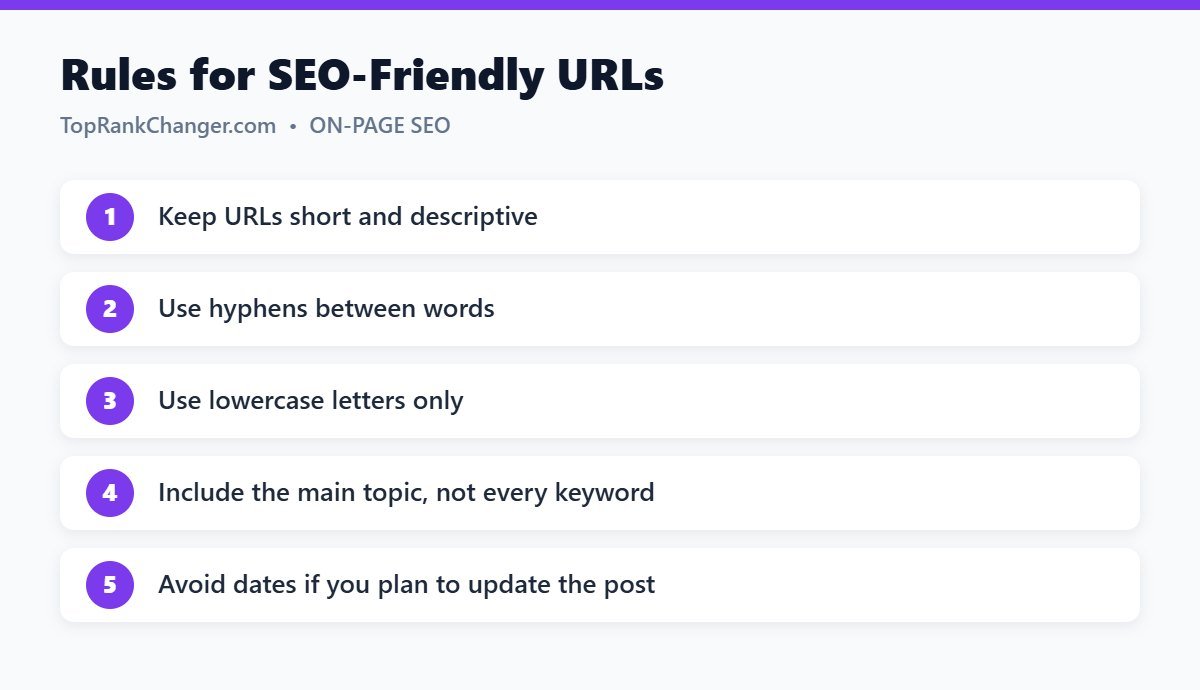
1. Keep them short
Shorter URLs are easier to read, share and remember. Remove filler words like “a”, “the” and “and” when they don’t add meaning.
2. Describe the content
Use the page’s main topic in the slug. For “How to Clean a Cast Iron Pan Without Ruining It”, the slug /clean-cast-iron-pan/ is ideal.
3. Use hyphens
Google recommends hyphens to separate words. Avoid underscores, spaces and run-together words.
4. Use lowercase
Some servers treat uppercase and lowercase URLs as different pages, which can create duplicates.
5. Avoid dates and numbers you may change
A URL like /best-laptops-2026/ or /15-seo-tips/ becomes awkward when you update the article. Keep slugs timeless when you plan to refresh content.
6. Keep a logical structure
For blogs, a simple /post-name/ structure works well. Deep folders like /blog/2026/09/category/sub/post/ add length without value.
Setting Up SEO-Friendly URLs in WordPress
Go to Settings → Permalinks and choose Post name. Then, when writing each post, edit the slug in the post settings panel to keep it short. WordPress creates slugs from titles by default, which can be long.
Should You Change Existing URLs?
Only when there is a strong reason. Changing a URL resets some signals and requires a 301 redirect from the old address. For pages that already rank and have links, a slightly long URL is not worth the risk.
Final Thoughts
SEO-friendly URLs are a small detail with lasting benefits. Set the right permalink structure from the start, write short descriptive slugs, and keep them stable. For more page-level tips, see our on-page SEO checklist.