
Search Intent: How to Give Google (and Readers) Exactly What They Want
You can write the most detailed, beautifully designed article on the internet and still fail to rank if it does not match search intent. Understanding intent is one of the fastest ways to improve rankings, because it tells you exactly what kind of content Google wants to show for a query.
What Is Search Intent?
Search intent (also called user intent) is the reason behind a search — the goal the person is trying to achieve. Two searches can contain similar words yet have completely different intent. “iPhone battery replacement” might mean how do I do it myself, where can I get it done or how much does it cost. Google studies how people interact with results to learn which type of page best satisfies each query.
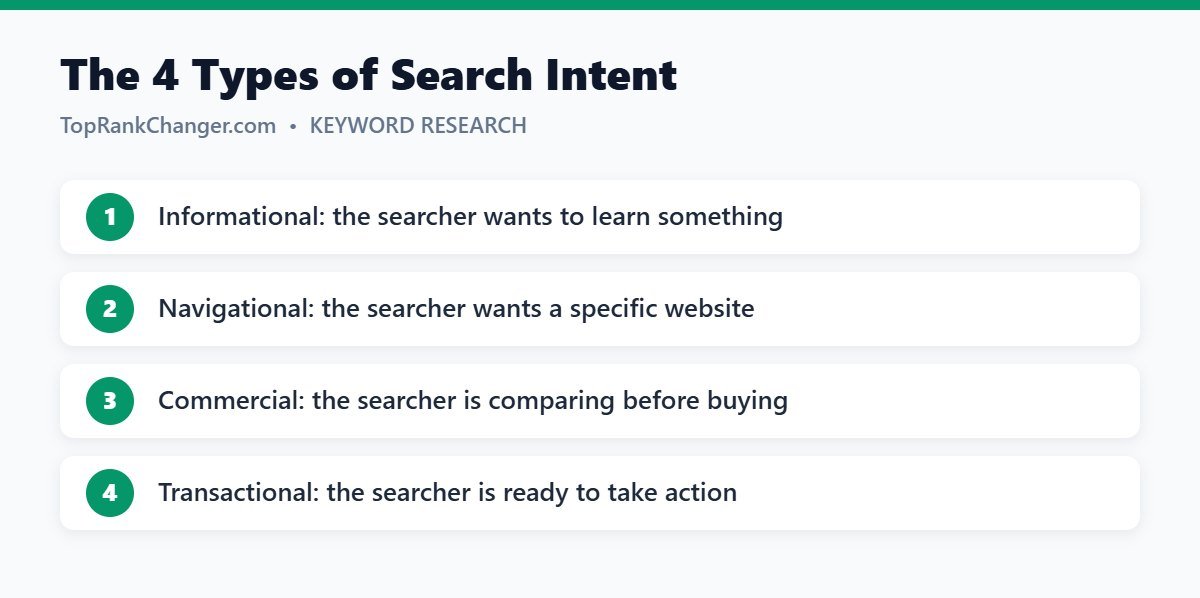
The Four Main Types of Search Intent
1. Informational intent
The searcher wants to learn something. Queries often start with how, what, why or guide. Examples: “what is a canonical tag”, “how to start a podcast”. Best content types: tutorials, explainers, step-by-step guides.
2. Navigational intent
The searcher wants to reach a specific website or page, such as “YouTube login” or “Google Search Console”. Unless you are that brand, these keywords are rarely worth targeting.
3. Commercial investigation
The searcher is researching before a purchase. Queries include best, review, vs, alternatives or top. Examples: “best WordPress hosting for beginners”, “Ahrefs vs Semrush”. Best content types: comparison articles, reviews, curated lists.
4. Transactional intent
The searcher is ready to act — buy, sign up or download. Examples: “buy domain name”, “Canva pro discount”. Best content types: product pages, pricing pages, landing pages.
How to Identify Search Intent: The SERP Test
The most reliable way to find intent is simply to search the keyword on Google and study page one. Google has already done the work of figuring out what satisfies searchers. Look at three things, sometimes called the “three Cs”:
- Content type – are the results blog posts, product pages, category pages, videos or tools?
- Content format – are they how-to guides, listicles, reviews, comparisons or definitions?
- Content angle – what hook do they share? “For beginners”, “in 2026”, “cheap”, “step-by-step”, “in 10 minutes”?
Also note the search features. A featured snippet suggests people want a quick, direct answer. Lots of videos suggest a visual demonstration helps. A local map pack means the intent is local.
Mixed Intent Keywords
Some keywords show a mix of result types, for example half guides and half product pages. This means Google is not sure what most people want. You can still target these keywords, but match the format that best fits your site — and make sure your page serves that intent better than anyone else.
How to Optimize Content for Search Intent
- Answer the main question early. Put a clear, direct answer in the first few paragraphs, then expand with detail.
- Match the expected format. If every top result is a numbered list, a long essay will struggle.
- Cover follow-up questions. Use “People also ask” questions as subheadings or an FAQ section.
- Match the depth. A simple definition query needs a short, clear answer. A “complete guide” query needs depth.
- Use the right angle. If searchers want beginner content, avoid jargon.
- Make it easy to scan. Headings, short paragraphs, tables and bullet lists help readers find their answer fast.
Real Example
Imagine you want to rank for “how to clean white shoes”. Searching shows step-by-step guides with photos and a few videos, most promising methods that use household items. A product page selling shoe cleaner would not rank, and neither would a history of sneakers. The winning article is a practical, step-by-step guide with photos, several methods for different materials and a quick summary at the top.
Fixing Pages That Don’t Rank Because of Intent
If a page is indexed but stuck on page three or lower, compare it with the current top results. Common intent mismatches include:
- Your page is a product page but results are guides (or the reverse).
- Your article is too broad when the results are specific.
- Your content targets experts when results target beginners.
- Your content is outdated while results emphasize the current year.
Rewriting a page to match intent is often more effective than building more links to it.
Frequently Asked Questions
Is search intent a ranking factor?
Not as a single named factor, but Google’s goal is to show results that satisfy the searcher, so matching intent is essential to ranking.
Can search intent change over time?
Yes. Intent can shift with seasons, news or new products. Recheck the results for important keywords from time to time.
Final Thoughts
Before writing any article, search your keyword and study page one. Ask what the searcher really wants and build the page that gives it to them most completely and clearly. It is a simple habit that dramatically improves your chances of ranking. For the full process, see our keyword research guide.