

Long-Tail Keywords: Why They Are the Secret to Ranking a New Blog
When you start a blog, it is tempting to target big, popular keywords. But the fastest path to traffic for a new website almost always goes through long-tail keywords. This guide explains what they are and how to use them.
What Are Long-Tail Keywords?
Long-tail keywords are specific search phrases with lower individual search volume. They are often three or more words long, but the real defining feature is specificity, not word count.
- Head keyword: “running shoes”
- Mid-tail: “best running shoes for women”
- Long-tail: “best running shoes for women with flat feet on a budget”
The name comes from the shape of a search demand graph: a few very popular terms form the “head”, and a very long “tail” of specific, less-searched phrases stretches behind it. Collectively, that tail makes up a large share of all searches.
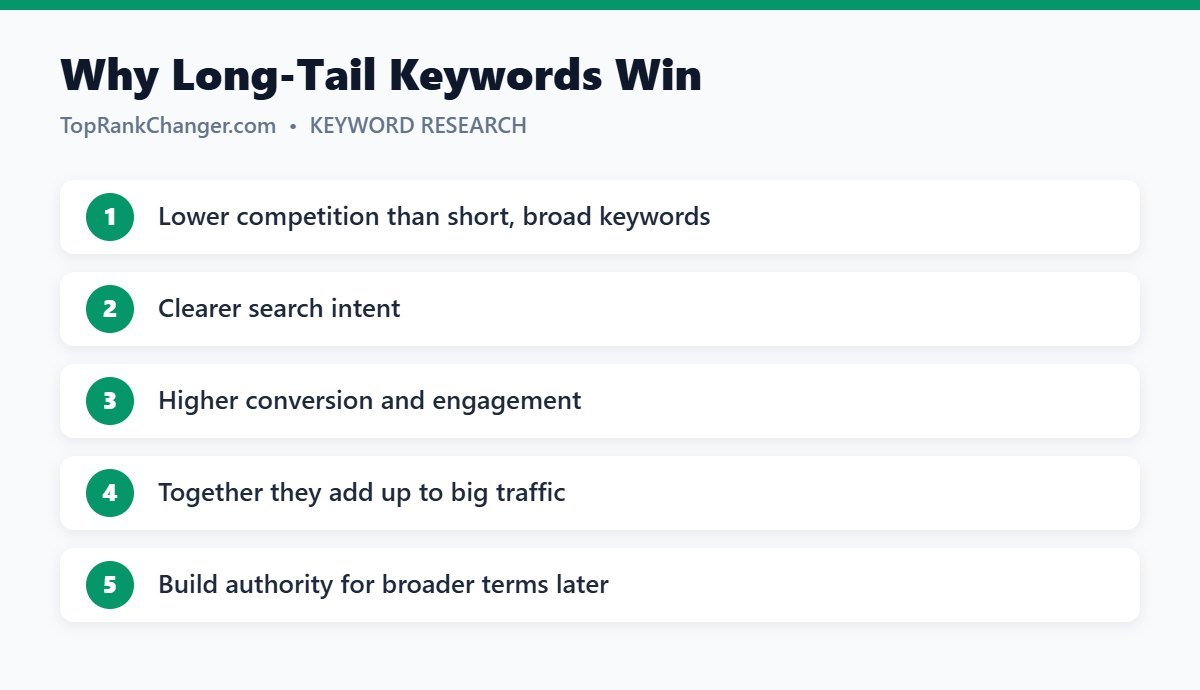
Why Long-Tail Keywords Are Perfect for New Sites
1. Less competition
Big brands focus on high-volume terms. Specific questions are often answered poorly or not at all, giving small sites a real chance.
2. Clearer intent
Someone searching “shoes” could want anything. Someone searching “how to clean white leather sneakers without damaging them” knows exactly what they want, so you can give them exactly that.
3. Better engagement
Because your content precisely matches the question, visitors are more likely to read, trust you and explore more pages.
4. They add up
Ten articles bringing 300 visitors each equal 3,000 visitors a month — often more reliably than one article chasing a keyword you might never rank for.
5. They build authority
As you cover many specific topics in a niche, Google increasingly sees your site as an authority, making it easier to rank for broader terms later.
How to Find Long-Tail Keywords
- Google Autocomplete: type a seed topic and note suggestions. Try adding question words: how, why, can, best, vs.
- People Also Ask: expand the boxes; each click reveals more questions.
- Related searches at the bottom of the results page.
- Forums: Reddit and niche communities show the exact words people use.
- Search Console: once you have traffic, look for long queries you already appear for.
- Keyword tools: filter for lower-difficulty phrases with question modifiers.
For a complete process, read our guide on keyword research for beginners.
Don’t Trust “Zero Volume”
Keyword tools often show zero or very low volume for long-tail phrases because their data is estimated and grouped. Many of these keywords still bring steady traffic. If real people ask the question in forums or People Also Ask, it is worth answering.
One Article, Many Long-Tail Keywords
You don’t need a separate post for every variation. A thorough article on “how to clean white sneakers” can naturally rank for “clean white shoes with baking soda”, “remove yellow stains from white sneakers” and dozens of similar searches. Group close variations together and cover them as sections of one great article.
Final Thoughts
Long-tail keywords are how small websites compete with big ones. Answer specific questions better than anyone else, publish consistently, and your traffic — and authority — will steadily grow.