Search Volume Explained: Why Keyword Numbers Can Mislead You
Search volume is usually the first number beginners look at in keyword research. It is useful, but it is also widely misunderstood. Here is what search volume really tells you and how to use it without being misled.
What Is Search Volume?
Search volume is the estimated number of times a keyword is searched in a given period, usually shown as a monthly average for a specific country.
Why Search Volume Numbers Are Estimates
- Different data sources: tools use different data, samples and models, so their numbers often disagree.
- Grouping: similar keywords are sometimes combined into one figure.
- Averages hide seasonality: “Christmas cookie recipes” averages a modest monthly number but spikes enormously in December.
- Rounding and ranges: low-volume terms are often shown as ranges or zeros.
Volume Is Not Traffic
Even if you rank first, you won’t get every search as a click. Ads, featured snippets, AI overviews, videos and other features take attention. Some searches get answered without any click. A keyword with lower volume but clear intent can bring more visitors than a bigger, vaguer one.
A Single Page Ranks for Many Keywords
A good article often ranks for hundreds of related searches. The volume of the main keyword may significantly underestimate the page’s total traffic potential. Some tools estimate this as “traffic potential” based on what the top page currently receives.
Don’t Ignore Low or Zero Volume
Many valuable long-tail keywords show little or no volume in tools yet bring steady visits. If real people ask the question in forums or People Also Ask boxes, it is likely worth answering.
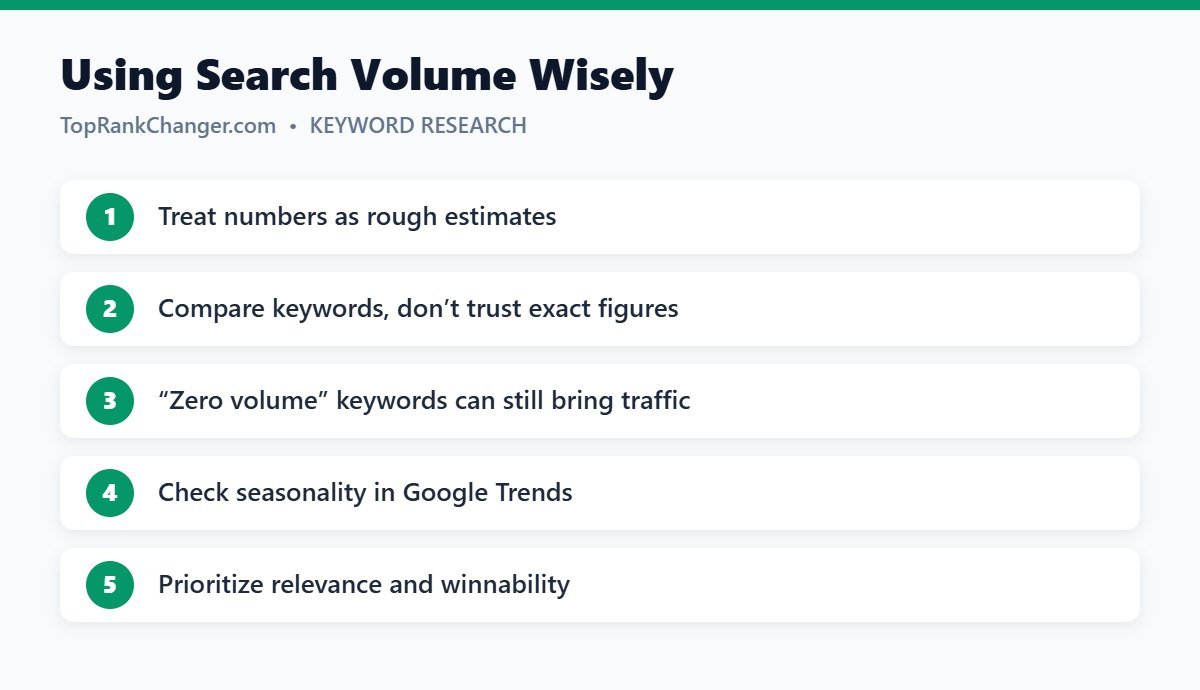
How to Use Search Volume Wisely
- Use it to compare keywords, not as an exact forecast.
- Check seasonality with Google Trends.
- Combine it with difficulty and intent — see keyword difficulty explained.
- After publishing, rely on Search Console impressions, which show real data for your site.
Final Thoughts
Search volume is a helpful clue, not a promise. Choose topics based on relevance, intent and whether you can win — and let real performance data guide you once you publish.