How to Write a Blog Introduction That Keeps Readers Reading
Your blog introduction decides whether a visitor stays or clicks back to Google. A strong introduction confirms the reader is in the right place and gives them a reason to keep going. Here is how to write one.
Why the Blog Introduction Matters
Search visitors arrive with a specific question. In the first few seconds they scan to see if your page will answer it. If they see a long story or vague filler, many leave. A clear introduction keeps them reading, which is good for readers, engagement and ad revenue.
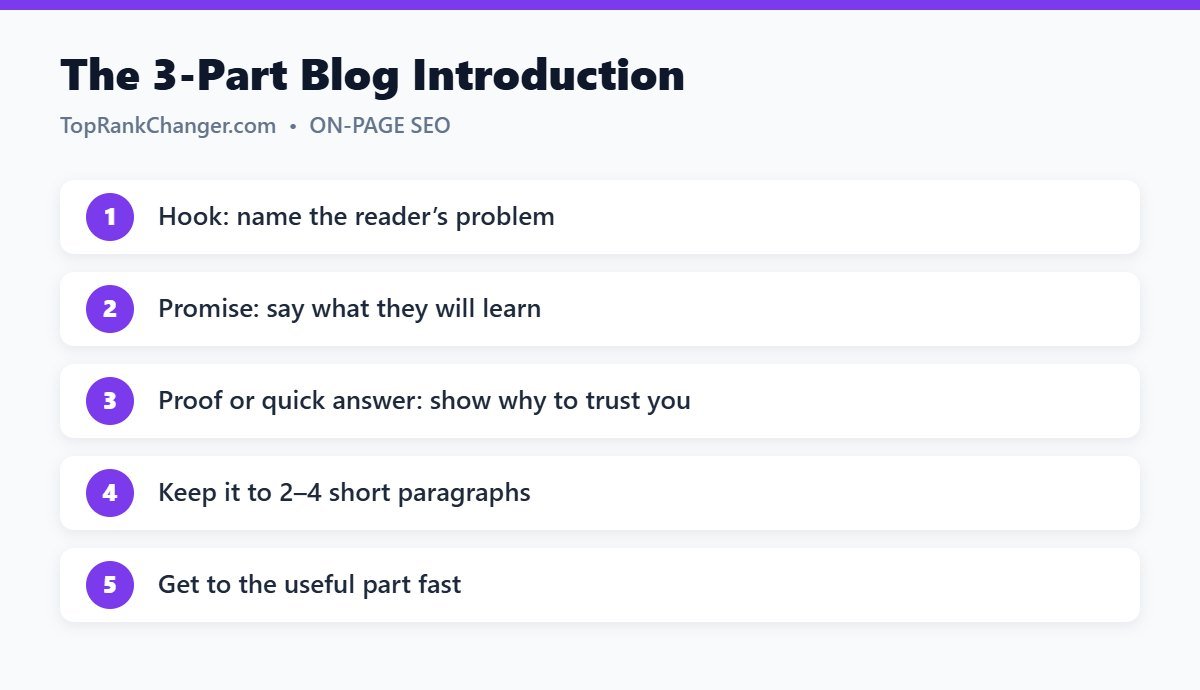
A Simple Formula: Hook, Promise, Proof
1. Hook
Start with the reader’s problem or goal in their own words. “Your tomato leaves are turning yellow and you’re not sure why.”
2. Promise
Tell them what they’ll get. “This guide covers the seven most common causes and exactly how to fix each one.”
3. Proof or quick answer
Give a reason to trust you or a quick summary. “In most cases, the cause is overwatering — here’s how to tell.”
More Tips
- Keep it short: two to four short paragraphs are usually enough.
- Use the main keyword naturally in the first paragraph or two so readers and search engines immediately see the topic.
- Match intent: for quick-answer queries, give the answer right away.
- Avoid clichés: skip “In today’s fast-paced world…” and dictionary definitions nobody asked for.
- Write it last: it’s often easier once you know exactly what the article covers.
Examples
Weak: “Gardening is a wonderful hobby enjoyed by millions. There are many plants you can grow. In this post, we’ll talk about tomatoes.”
Strong: “Yellow leaves on tomato plants are frustrating, but they are usually easy to fix. Below are the seven most common causes, how to diagnose each one in under a minute, and what to do next.”
Other Opening Styles
- Surprising fact that relates directly to the reader’s problem.
- Short personal story — one or two sentences that show experience.
- Question that mirrors what the reader is thinking.
Final Thoughts
A great blog introduction is short, specific and focused on the reader. Hook them, make a promise, and get to the useful part quickly. Pair it with a strong structure from our blog post outline guide.