HTTPS and SSL for SEO: Why Every Website Needs a Secure Connection
That small padlock in the browser bar matters more than it looks. HTTPS protects your visitors, builds trust and is a confirmed, lightweight Google ranking signal. Today there is no reason for any website to run without it.
What Are HTTPS and SSL?
HTTPS (Hypertext Transfer Protocol Secure) encrypts data sent between a visitor’s browser and your website. It uses an SSL/TLS certificate installed on your server. Without it, information such as form entries could be intercepted.
Why HTTPS Matters
- Security: protects logins, contact forms and personal information.
- Trust: browsers label http sites as “Not secure”, which scares visitors away.
- SEO: Google uses HTTPS as part of its page experience signals.
- Requirements: many modern browser features and ad partners require secure pages.
How to Get an SSL Certificate
Most hosting companies provide free certificates through Let’s Encrypt or their own systems, often installed automatically. Check your hosting dashboard for an SSL or security section.
Moving a WordPress Site to HTTPS
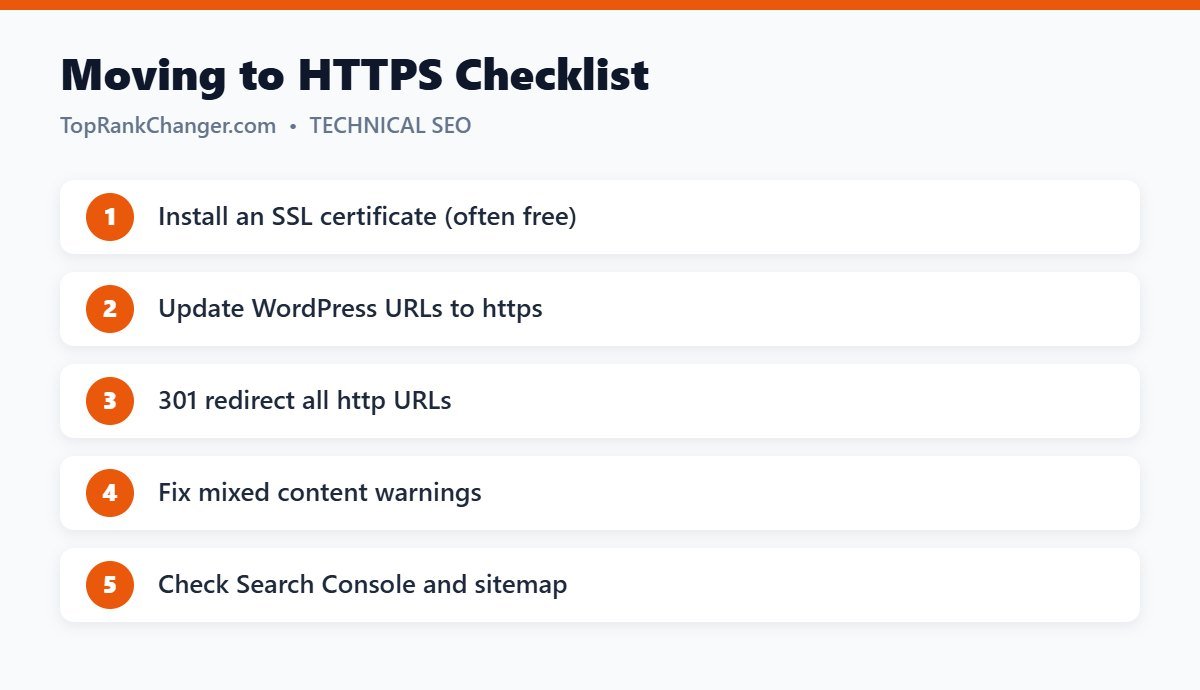
- Back up your site.
- Install and activate the SSL certificate in your hosting panel.
- Update WordPress URLs in Settings → General to use
https://for both the WordPress Address and Site Address. - Redirect http to https with a 301 redirect. Many hosts offer a “force HTTPS” setting.
- Fix mixed content: images or scripts loaded over http on an https page trigger warnings. Update old URLs in your content.
- Update Search Console: make sure your https version is verified and resubmit your sitemap.
Common Issues
- Redirect loops caused by conflicting settings between the host, a CDN and WordPress.
- Missing padlock due to mixed content — use your browser’s developer console to find the insecure resource.
- Expired certificates — enable auto-renewal.
Final Thoughts
HTTPS is now a basic requirement, not an extra. It is usually free, quick to set up and protects both your visitors and your reputation. Check your site today and make sure every page loads securely.