Google Algorithm Updates Explained: What to Do When Rankings Change
One morning your traffic jumps — or drops — and nothing on your site changed. Often, the reason is one of Google’s algorithm updates. Understanding how updates work helps you respond calmly and sensibly.
What Are Google Algorithm Updates?
Google constantly adjusts its ranking systems — thousands of changes each year. Most are small and unnoticeable. Google algorithm updates that Google announces publicly are usually larger changes that can noticeably shift rankings.
Types of Updates
- Core updates: broad changes to how Google assesses content overall, released several times a year. They are not aimed at specific sites or tactics.
- Spam updates: improvements to systems that detect spam, such as link schemes, scaled low-value content and cloaking.
- Specific system updates: changes to particular systems, such as reviews or site reputation.
Google lists confirmed updates on its Search Status Dashboard, including start and end dates.
Why Rankings Change After Core Updates
Google has explained that a drop after a core update doesn’t necessarily mean something is wrong with your pages. Other content may simply be judged more relevant or helpful. Rankings are relative: if others improve, you can move down without changing anything.
What to Do if Rankings Drop
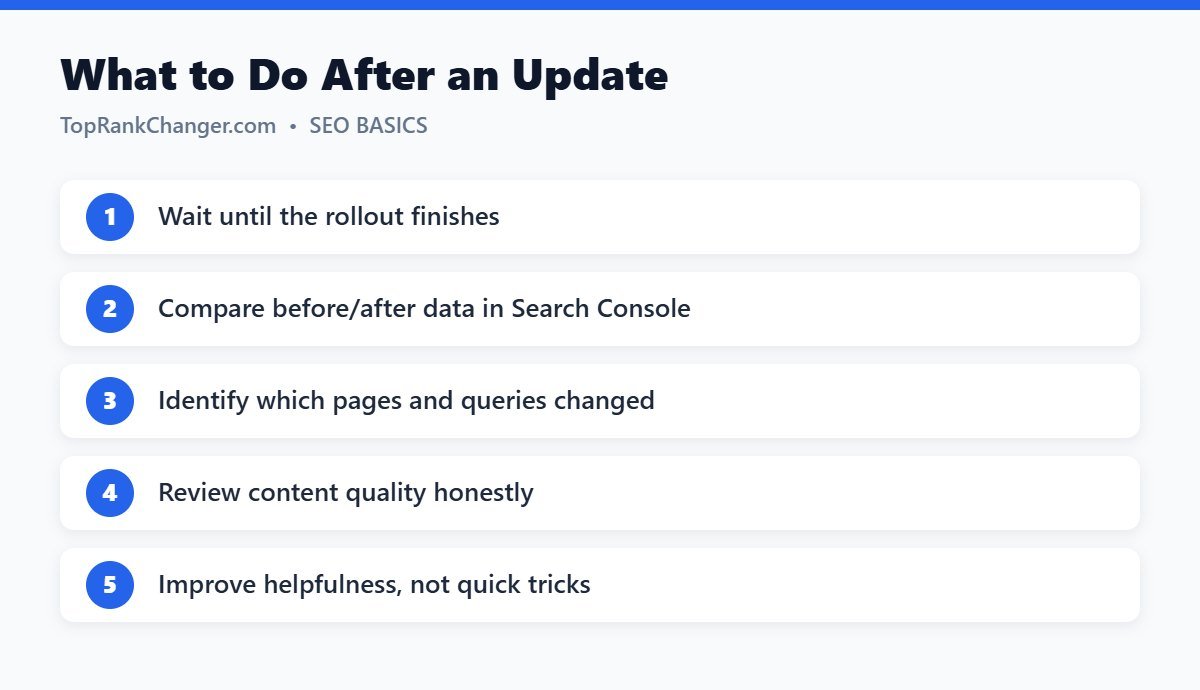
- Don’t panic or make rushed changes during the rollout, which can take two weeks or more.
- Measure properly: compare a week or two after the update with the period before in Search Console.
- Find patterns: which pages, topics or query types lost visibility?
- Study winners: look at who now ranks for your lost queries and what they do better.
- Improve genuinely: update outdated content, add first-hand experience, remove or merge thin posts and improve page experience.
- Be patient: recovery often happens gradually or with a future core update.
Questions to Ask About Your Content
- Does it provide original information, research or analysis?
- Would readers trust it and recommend it?
- Is it written by someone who clearly knows the topic?
- Is it made for people, or mainly to attract search clicks?
Read more about E-E-A-T.
How to Protect Your Site
Sites built on shortcuts are most vulnerable. Sites built on helpful, trustworthy content tend to grow over time, even with short-term fluctuations. Diversify traffic with email and social so no single source controls your business.
Final Thoughts
Google algorithm updates are a constant. Focus on the long term, measure carefully and keep making your content the best answer for your readers.