11 Best Free SEO Tools for Beginners (and How to Use Them)
You do not need expensive software to do effective SEO. Many of the most useful tools are completely free — and several come straight from Google. Here are the free SEO tools every beginner should know, what each one is best for and how to use them together.
Google’s Own Free Tools
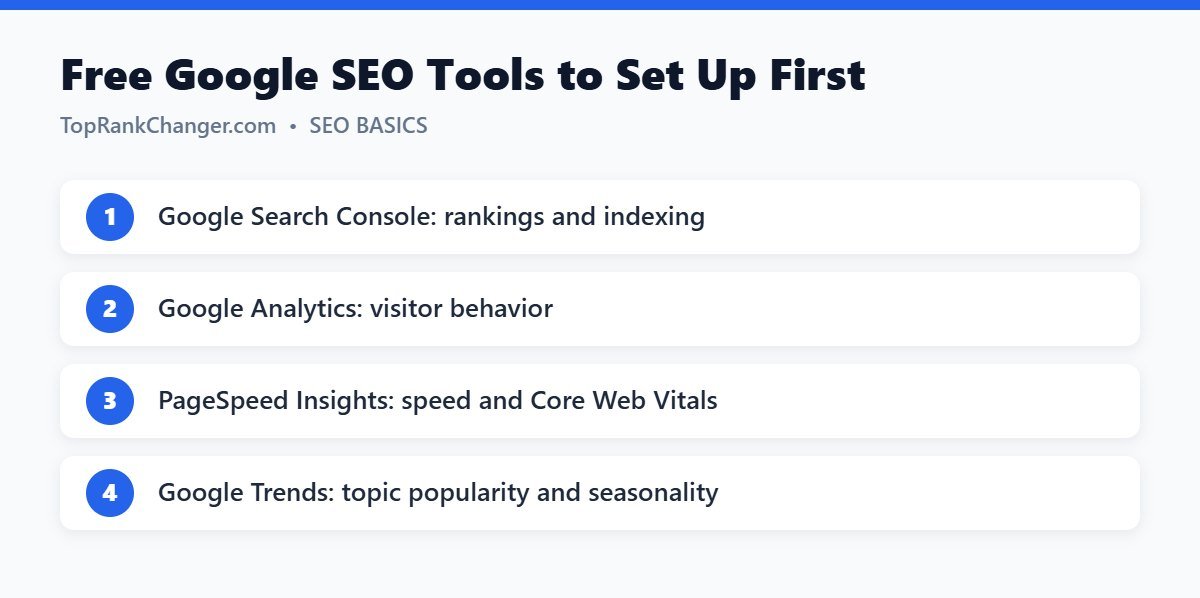
1. Google Search Console
Best for: seeing exactly how Google views your site.
Search Console shows which searches bring people to your site, your average rankings, click-through rates, indexing problems, Core Web Vitals and links. If you only use one SEO tool, make it this one. Check the Performance report weekly to find pages with many impressions but few clicks — quick wins for improving titles.
2. Google Analytics
Best for: understanding what visitors do on your site.
Google Analytics shows how many people visit, where they come from, which pages they view and how engaged they are. Pairing it with Search Console tells you both how people find you and what happens after they arrive.
3. PageSpeed Insights
Best for: checking page speed and Core Web Vitals.
Enter a URL to see real-user speed data plus specific recommendations. Test your homepage and your most important blog posts on mobile.
4. Google Trends
Best for: comparing topic popularity and spotting seasonal trends.
Trends shows relative search interest over time and by region. Use it to decide between two topics, time seasonal content and spot rising subjects early.
5. Google Search Itself
Best for: keyword ideas and understanding search intent.
Autocomplete suggestions, “People also ask” boxes and related searches are real data about what people search. Studying the first page of results is the best way to understand search intent.
6. Rich Results Test
Best for: checking structured data.
Tests whether your page’s structured data (like FAQ, recipe or review markup) is valid and eligible for enhanced search features.
Other Free Tools Worth Using
7. Bing Webmaster Tools
Bing’s version of Search Console. It is easy to set up (you can import your site from Search Console), shows Bing search data and includes a free site scanner that flags SEO issues.
8. Yoast SEO or Rank Math (WordPress)
Free WordPress plugins that handle title tags, meta descriptions, XML sitemaps, schema markup and basic content analysis. You only need one.
9. Screaming Frog SEO Spider
A desktop crawler that scans your site like a search engine. The free version crawls up to 500 URLs — plenty for most blogs — and finds broken links, missing titles, duplicate content and redirect chains.
10. Free Versions of Keyword Tools
Several popular SEO platforms, including Ahrefs and Semrush, offer limited free tools or free accounts that provide keyword ideas, difficulty estimates and backlink checks. The limits are tight, but they are useful for spot checks.
11. AnswerThePublic and AlsoAsked-style tools
These tools visualize the questions people ask around a topic. Free plans have daily limits but are excellent for finding blog post ideas and FAQ sections.
A Simple Free SEO Workflow
- Find ideas with Google Autocomplete, People Also Ask and question tools.
- Validate interest with Google Trends and a free keyword tool.
- Check intent and competition by studying the first page of Google.
- Write and optimize with help from Yoast SEO or Rank Math and our on-page SEO checklist.
- Check speed with PageSpeed Insights.
- Monitor results in Search Console and Analytics, then improve what is close to page one.
- Audit monthly with Screaming Frog and Bing Webmaster Tools.
When Should You Pay for SEO Tools?
Paid tools become worthwhile when you publish frequently, compete in a tough niche, or need detailed competitor and backlink data. Until then, the free tools above cover almost everything a new blog needs. Spend your early budget on good hosting and great content instead.
Final Thoughts
The best SEO tool is the one you actually use regularly. Set up Search Console and Analytics first, build a simple routine around them, and add other tools as your site grows.