How to Write a Blog Post That Ranks on Google: A 10-Step Process
Writing a blog post is easy. Writing one that ranks on Google and keeps readers engaged takes a process. This guide shares a repeatable, step-by-step method you can use for every article you publish.
Step 1: Start With a Keyword and a Clear Goal
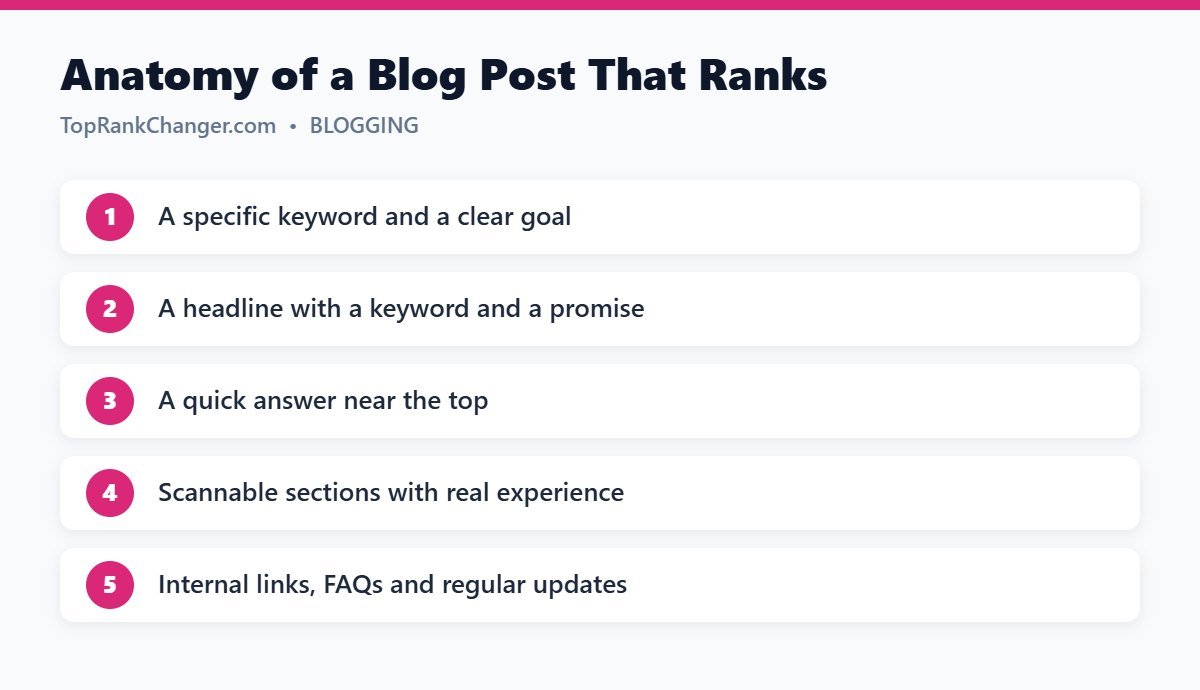
Every post should target one main search query and answer it better than anything else on page one. Choose a specific, realistic keyword using our keyword research guide, and write down in one sentence what the reader should know or be able to do after reading.
Step 2: Study the Top Results
Search your keyword and open the top five results. Note:
- The type and format of content (guide, list, comparison)
- Subtopics that every result covers
- Questions that are left unanswered
- What is outdated, confusing or missing
Your goal is not to copy them but to create the most helpful version — covering what readers need and adding what others missed.
Step 3: Create an Outline
An outline keeps your article focused and organized. Use H2 headings for main sections and H3 headings for details. A typical “how-to” outline looks like this:
- Introduction (the problem and what the reader will learn)
- Quick answer or summary
- Step-by-step instructions
- Tips and common mistakes
- FAQs
- Conclusion
Step 4: Write a Strong Headline
Your headline should include the main keyword and a clear promise. Numbers, specifics and audience cues help: “How to Grow Tomatoes in Pots: 9 Tips for Beginners” is better than “Tomato Growing Thoughts”. See how to write title tags.
Step 5: Write an Introduction That Hooks
Keep introductions short: acknowledge the reader’s problem, show you understand it and tell them what they will get. Avoid long stories before the useful part — readers who don’t quickly see their answer will leave.
Step 6: Write the Body for Humans
- Be specific. Replace vague advice (“optimize your images”) with exact steps (“resize images to 1,200 pixels wide and convert them to WebP”).
- Share experience. Include what you tried, what worked, and mistakes you made.
- Use examples and visuals. Screenshots, photos, tables and diagrams make content clearer and more original.
- Keep paragraphs short. Two to four sentences each, especially for mobile readers.
- Write conversationally. Use “you” and simple words.
Step 7: Optimize Naturally
- Use the main keyword in the title, URL, introduction and at least one heading.
- Include related terms and questions naturally.
- Add descriptive alt text to images.
- Link to three to five related posts and one or two authoritative external sources.
Use our on-page SEO checklist before publishing.
Step 8: Add an FAQ Section
Answer common follow-up questions from the “People also ask” box in short, direct paragraphs. This helps readers and can help your content appear for more searches.
Step 9: Edit Ruthlessly
- Cut filler sentences and repeated points.
- Check facts, numbers and links.
- Read the article aloud to catch awkward phrasing.
- Preview it on a phone to check formatting.
Step 10: Publish, Promote and Update
After publishing, link to the new post from related older articles, share it with your audience and request indexing in Search Console. After a couple of months, check which queries it ranks for and update the post to cover them better. Updating older content is one of the most effective SEO activities.
How Long Should a Blog Post Be?
There is no ideal word count. The right length is whatever it takes to answer the question completely and clearly. Some queries need 600 words; others need 3,000. Check the length of top-ranking articles as a rough guide, but focus on usefulness, not word count.
Using AI Tools Responsibly
AI tools can help with brainstorming, outlines and editing. Google’s guidance focuses on the quality and helpfulness of content, not how it was produced — but mass-producing unedited content primarily to manipulate rankings violates its spam policies. Always add your own experience, check facts carefully and make sure every post genuinely helps readers.
Final Thoughts
Great SEO content comes from a simple formula: understand what the searcher needs, deliver it clearly and completely, and make the page easy to use. Follow these ten steps for every post and your blog will steadily grow in rankings and reader trust.