
Duplicate Content and SEO: Myths, Causes and Easy Fixes
“Will duplicate content get my site penalized?” It is one of the most common SEO worries. The reality is more reassuring — but duplicate content can still waste your site’s potential. Here is what you need to know.
What Is Duplicate Content?
Duplicate content is substantial blocks of content that appear at more than one URL, either on your own site or across different websites. It can be exact copies or very similar pages.
Myth: Duplicate Content Causes a Penalty
Google has repeatedly explained that ordinary duplicate content does not trigger a penalty. Most duplication is accidental and technical. Google simply picks one version to show and filters the rest.
The exception is deliberate, manipulative copying — scraping other sites or mass-producing near-identical pages to game rankings. That can violate spam policies.
Why Duplicate Content Still Matters
- Google may choose the wrong version to show in results.
- Signals get split across several URLs instead of one strong page.
- Crawl effort is wasted on large sites.
- Thin, repetitive pages can lower the overall quality impression of a site.
Common Causes
- http/https or www/non-www versions both accessible
- URL parameters for tracking, sorting or filtering
- Tag and archive pages that repeat the same post excerpts
- Two blog posts covering the same topic
- Manufacturer product descriptions used by many stores
- Content syndicated or scraped by other sites
How to Fix Duplicate Content
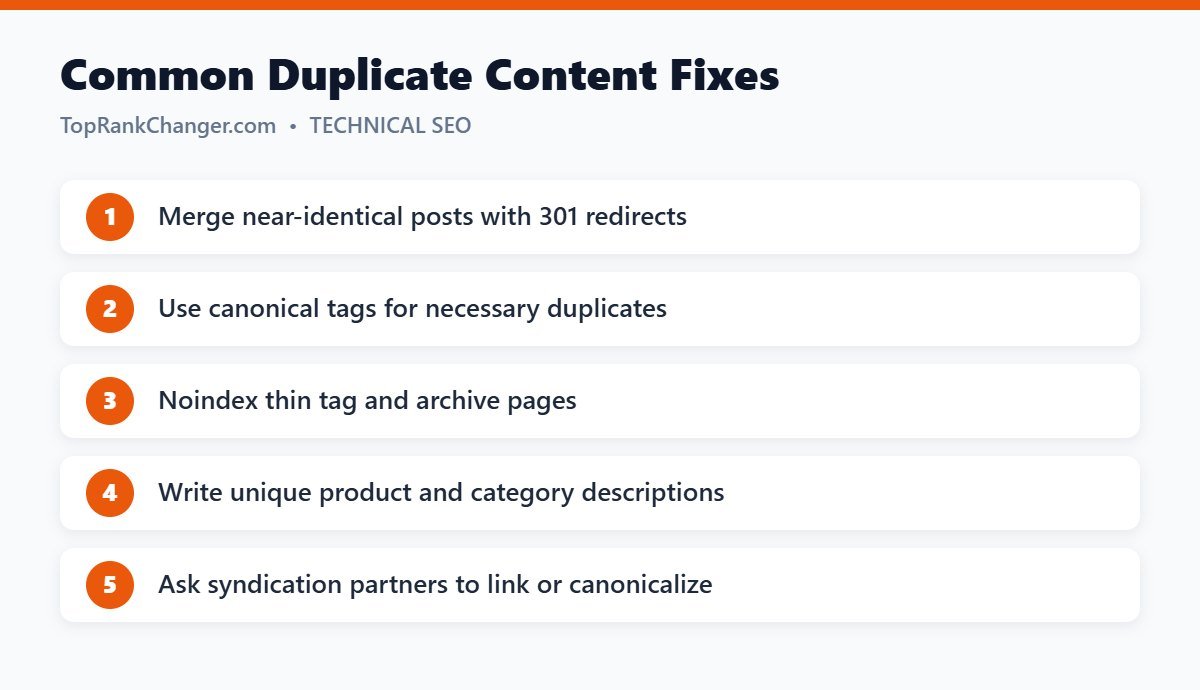
- Pick one site version and 301 redirect the others (for example, everything to https without www).
- Merge overlapping posts and redirect the weaker one. This also solves keyword cannibalization.
- Use canonical tags when duplicates must stay live.
- Noindex thin archives, such as tag pages with only one or two posts.
- Write unique descriptions for products and categories.
- For syndication, ask partners to link back to the original and ideally use a canonical tag.
What About Scrapers?
If other sites copy your content, Google usually identifies the original. If a scraper outranks you or uses your work without permission, you can file a DMCA request with Google.
Final Thoughts
Don’t panic about duplicate content, but don’t ignore it either. Keep one clear URL for each piece of content, consolidate overlapping pages and make every indexable page unique and useful.